Water is one of the most precious resources on the planet. More than 1 billion people do not have access to a source of clean drinking water, and around 3 billion experience water scarcity at least one month per year. Water stress is a serious issue in many parts of the world. Discover its causes and effects, but most importantly the solutions to the water crisis.
Anyone who has ever seen a great, or even not so good movie about life on the ocean knows that humans just can’t drink seawater. After all, it’s full of salt that typically dehydrates the human body. But what if we could make seawater safer to drink? It turns out that we can and the process is called desalination. Desalination is a process that removes dissolved minerals (including but not limited to salt) from seawater, brackish water, or treated wastewater. A number of technologies have been developed for desalination, including reverse osmosis (RO), distillation, electrodialysis, and vacuum freezing. So why is seawater such an attractive water resource?
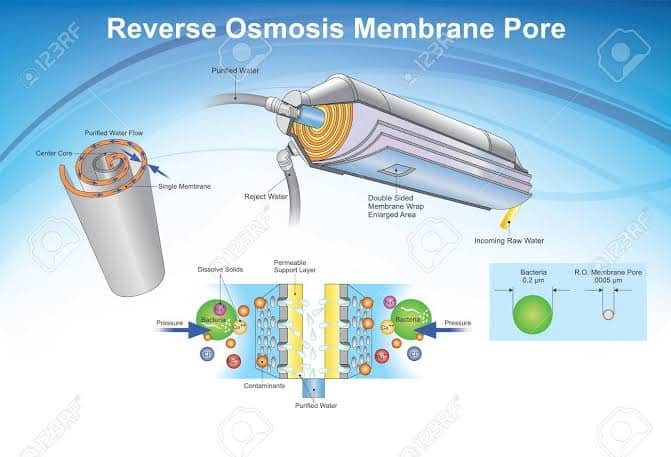
The distillation process mimics the natural water cycle in that salt water is heated, producing water vapor that is in turn condensed to form fresh water. One such treatment process is called Multi-Stage Flash Distillation. Another desalination treatment process with the most expanded use is membrane-based reverse osmosis,. In this process, pressure is applied to the water, which allows water to flow through a membrane, leaving the ions, salts, and other dissolved solids and nonvolatile organics behind.
 Reversing Water Crisis